Tile Installer Costs and Hidden Prep Fees You Can’t Ignore

When hiring a tile installer, don't forget about sub-floor preparation charges that can void your warranty and add thousands to your bill.
Find Relevant ExpertsPrimary keyword: tile installer
Secondary keywords: flooring and tile installer, tile installer price per square foot, tile installer licensing requirements, how to vet a tile installer, tile installer warranty
Table of Contents
- Tile Installer Costs and Hidden Prep Fees You Can’t Ignore
- Breaking Down the True Cost of Hiring a Tile Installer
- Labor Rates
- Material Markup
- Travel and Disposal Fees
- The Hidden Subfloor Preparation Cost Most Estimates Skip
- When prep is mandatory
- Cost examples
- How to Vet a Tile Installer to Avoid Surprises
- Licensing and insurance
- References and portfolio
- Contract essentials
- When DIY Might Beat Hiring a Pro (And When It Doesn’t)
- Cost comparison
- Time and skill considerations
- The short version
Tile Installer Costs and Hidden Prep Fees You Can’t Ignore
If you’re budgeting for a new bathroom floor, you’re probably looking at a tile installer quote and thinking you’ve got the whole picture.
What most price breakdowns forget is the sub‑floor preparation charge—a hidden fee that can rise $1‑$3 per square foot, and ignoring it may void the tile manufacturer’s warranty.
Ask for a line‑item prep cost before you sign anything; otherwise you’ll be paying extra later to fix a problem that should have been addressed up front.
Breaking Down the True Cost of Hiring a Tile Installer
Beyond the headline quote, the actual cost of hiring a tile installer can vary significantly depending on several factors. Here's a breakdown of the typical costs involved.
Labor Rates
The average hourly labor rate for a tile installer ranges from $45 to $85 per hour, depending on location and expertise. For a standard residential project, this translates to around 20-40 hours of work, which can cost anywhere from 2-16 times the quoted price (excluding material costs).
Material Markup
Tile materials typically carry a markup of 10-20% above wholesale costs. This means that for a $100 tile, you'll pay closer to $120-$140 for your project.
Travel and Disposal Fees
| Location | Mileage Fee |
|---|---|
| Urban Areas | $0.50-1.00 per mile |
| Rural Areas | $1.00-2.00 per mile |
Assuming a 10-mile round trip from the installer's shop to your home, this adds an additional $5-$20 to their labor bill.
Tile disposal fees range from $0.20-$0.40 per square foot of tile removed. For example, if you're removing 100 sqft of tiles during installation, you'll pay around $20-$40 upfront or have it factored into your overall project cost.
To give you a better idea, let's consider the costs for a typical 50 sqft kitchen renovation using 12x24 porcelain tiles.
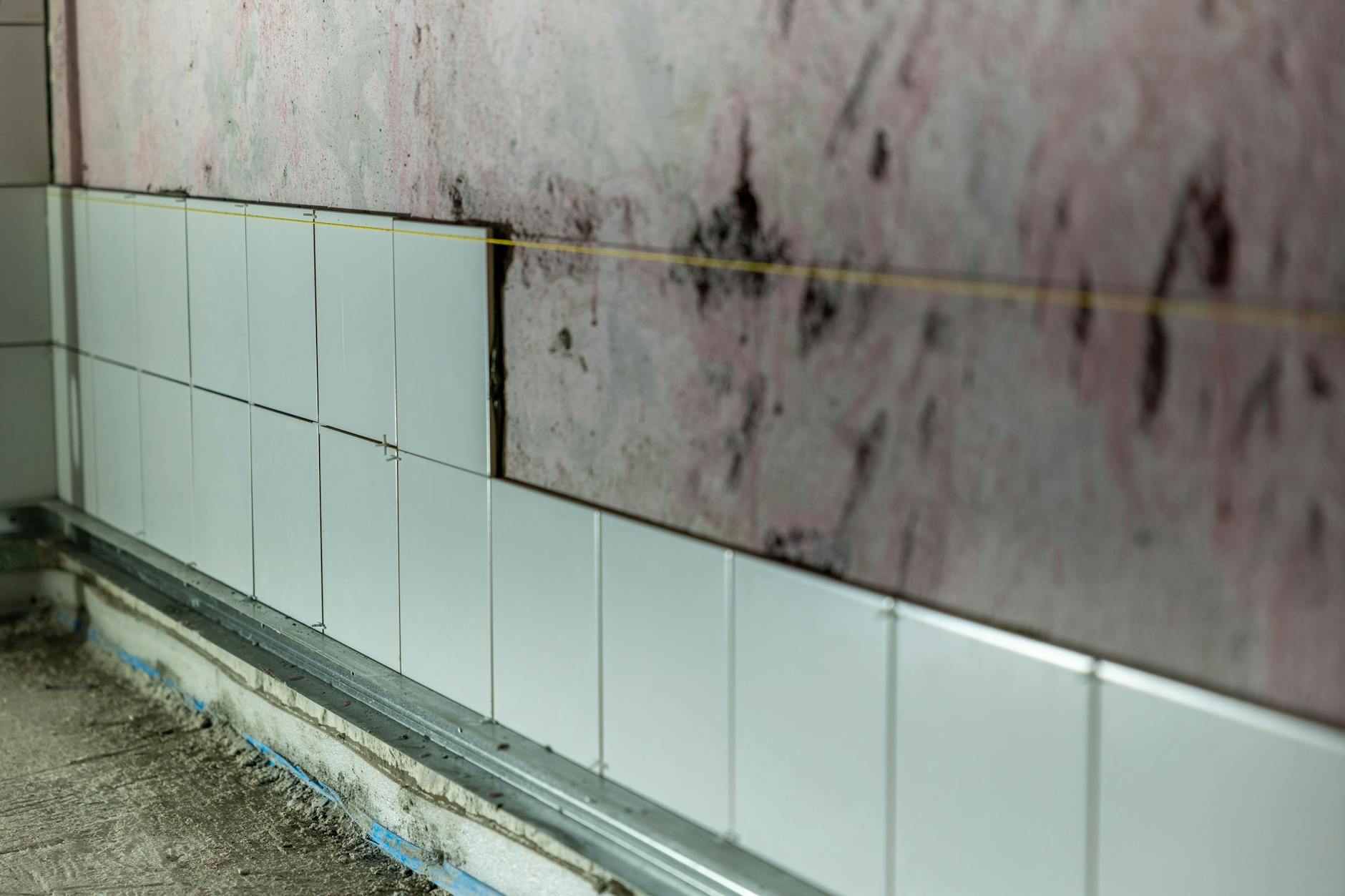
Assuming an installer charges $75 per hour and has to travel 7 miles (one way) from their shop to your location:
Total labor time: 1.2 hours Labor cost without fees: $90
Material markup: 15% above wholesale costs ($100-$115/linear ft) Material cost for 50 sqft installation: $300-$375 Travel fee: $7 (one way) x 3 (round trip) = $21 Disposal fee:
- 50 sqft tile removal costs around $10 (0.20 per sqft)
With these additional factors considered, your total project cost could increase by an extra few hundred dollars to a couple thousand dollars, depending on the specifics of your job and location.
Now let’s look at another example.
Total labor time: 2 hours Labor cost without fees: $150
Assuming an installer has to travel 15 miles (two ways) from their shop to reach our test installation site:
$30 (round trip for travel)
Example total cost: Labor $100, Travel $15, Material Markup of 12.5% above wholesale costs, making the additional material value $37.50
The Hidden Subfloor Preparation Cost Most Estimates Skip
If you hand a contractor a square‑foot count and a price, you’re probably missing the $1‑$3 per sq ft that makes the difference between a floor that lasts and one that cracks on day one.
When prep is mandatory
Tile only adheres properly to a flat, dry surface. Any low spots, moisture, or flex will push the adhesive aside and break the bond.
Self‑levelling screed or a polymer‑based leveling compound fills dips and creates a uniform plane. A 50‑lb bag spreads roughly 10 sq ft, so a 200‑sq‑ft bathroom will need two bags, about $45 each.
A moisture barrier—usually a 6‑mil polyethylene sheet—guards against concrete seepage. Installers charge $1‑$2 per sq ft for the material plus labor.
Cement backer board, such as Durock, provides a rigid substrate for large format tiles. It runs $2‑$3 per sq ft, plus $0.50 for the thin‑set that bonds it to the slab.
Skipping any of these layers typically voids the tile manufacturer’s warranty. The fine print will say “install on a level, dry, and stable surface” and the installer’s liability ends the moment the prep is ignored.
Cost examples
| Item | Cost per sq ft |
|---|---|
| Leveling compound | $0.90 |
| Moisture barrier | $1.50 |
| Cement backer board | $2.50 |
Worked example: A 250‑sq ft kitchen floor needs all three layers.
250 sq ft × ($0.90 + $1.50 + $2.50) = $1,225 in prep alone. Add the tile labor and you’re looking at a $5,000 job instead of the $3,800 estimate you first heard. Ignoring prep may shave $1,200 off the quote, but it also shaves years off the floor’s life.
How to Vet a Tile Installer to Avoid Surprises
Licensing and insurance
First, confirm the installer holds the license your state requires for general contractors or specialty flooring. A quick lookup on the state licensing board’s website should pull up the number and any disciplinary actions. Next, ask for a copy of the $1 M liability insurance certificate; a $5 000 claim can cripple a shop that only carries the minimum coverage. If the installer hesitates, walk away—no warranty will protect you when the sub‑floor fails because the pro cut corners.
References and portfolio
Ask for three recent references who had projects similar in size and tile type. Call them and note whether the installer showed up on time, kept the worksite clean, and left the grout sealed as promised. Then, scan the installer’s portfolio for at least one bathroom or kitchen that matches your layout; a photo of a 12 × 12 ft backsplash is more reassuring than a generic “tile work” banner. If you can’t see a comparable job, you’re likely looking at a specialist who won’t handle your sub‑floor prep.
Contract essentials
A solid contract reads like a checklist: define the scope (including sub‑floor leveling), set a realistic timeline, break the payment schedule into milestones, and spell out the warranty coverage. For example, a $3 000 job might be split 30 % deposit, 40 % midway, and 30 % on completion, with a 12‑month warranty that explicitly mentions “installations with proper sub‑floor preparation.”
Vetting checklist
| Item | Yes/No |
|---|---|
| State license verified | |
| $1 M liability insurance shown | |
| 3 recent references contacted | |
| Portfolio includes similar project | |
| Contract lists scope, timeline, payment, warranty |
Tick every box before you sign, and you’ll dodge the hidden prep fees that ruin a good deal.
When DIY Might Beat Hiring a Pro (And When It Doesn’t)
Cost comparison
| Item | DIY | Pro |
|---|---|---|
| Tile material | $3 / sq ft (mid‑range porcelain) | $3 / sq ft |
| Tool rental (wet saw, cutter) | $70 / day × 2 days = $140 | $0 |
| Labor | 35 hrs × $0 = $0 | 35 hrs × $45 / hr = $1,575 |
| Sub‑floor prep (if you skip) | $0 (but risk warranty) | $0.75 / sq ft × 200 sq ft = $150 |
For a 200 sq ft bathroom the material bill sits around $600. Add $140 for a wet saw and tile cutter, and you’re looking at roughly $740 in out‑of‑pocket costs. A professional would charge about $2,300 total once labor and sub‑floor prep are included. The math is clear: DIY saves money if you can absorb the time and risk.
Time and skill considerations
A typical 200 sq ft bathroom takes 30‑40 hours of careful work. That means two full weekends or a week of evenings. If you’re comfortable cutting tiles with a Bosch GTS 10 and can lay a straight line without a chalk line, you’ll stay on schedule. Most first‑timers spend extra hours correcting mis‑cuts, and a single cracked tile can add $5‑$10 in replacement cost plus a day of re‑grouting.
Skipping the sub‑floor prep may void the tile manufacturer’s warranty, and an uneven base often shows later as cracked grout or loose tiles. If you value a guarantee and want a flawless finish, the professional route is safer. If you have the patience, the right tools, and are okay with a learning curve, the DIY path can be a worthwhile cut‑price alternative.
The short version
- Subfloor prep can add $1‑$3 per sq ft and is often omitted from quotes
- Always verify licensing, insurance, and a written warranty before hiring
- Compare total cost (labor + prep + markup) to DIY material + tool rental to see real savings
Frequently Asked Questions
Ready to Start Your Project?
About the Author
Talented Xpert connects businesses with top-tier freelance talent. Post a task, hire vetted experts, or find your next freelance project.