Painting Contractors: Spot the Hidden Costs Before You Hire

Most painting contractors quote only per square foot, but hidden prep and repair work can add 15‑30% to the total. Knowing these extras lets you compare bids fairly.
Find Relevant ExpertsPrimary keyword: painting contractors
Secondary keywords: painters near me, painting contractor rates, licensed painting contractors, painting contractor insurance, painting contractor estimate, how to choose a painting contractor
Table of Contents
- Painting Contractors: Spot the Hidden Costs Before You Hire
- What to Expect from a Painting Contractor
- Core services
- Licensing and insurance basics
- Typical project timeline
- The Hidden Cost Most Homeowners Overlook
- Prep work and wall repair
- Furniture moving and protection
- Final cleanup fees
- How to Vet “Painters Near Me” Effectively
- Check BBB and online reviews
- Ask for references and photos
- Get three detailed estimates
- Comparing Quotes: What Should the Numbers Really Look Like?
- Price per square foot breakdown
- Labor vs. material costs
- Premium paint markup
- When the Usual Advice Fails: Large‑Scale vs. DIY Projects
- Projects over 2,500 sq‑ft
- High‑ceiling or textured walls
- ROI considerations
- Next Steps: Hiring Your Contractor Without Regret
- Final contract checklist
- Payment schedule and lien waivers
- Post‑job walkthrough
- The short version
Painting Contractors: Spot the Hidden Costs Before You Hire
If the bids you’re comparing look too good to be true, expect hidden costs to surface later. Most painting contractors quote per square foot, but that figure rarely tells the whole story.
Guides will hand you an average $2‑$4 per sq ft and call it a day, yet they skip the prep and repair work that can add 15‑30 % to any quote, turning a seemingly cheap bid into a budget buster. Scraping old paint, sanding rough spots, and filling cracks aren’t “extras”; they’re part of the job.
Before you sign, ask for a line‑item breakdown of surface preparation, priming, and any needed repairs. Those numbers will show whether the low price is genuine or a trap.
What to Expect from a Painting Contractor
Core services
A typical contractor will prepare the surface, fill cracks, sand rough spots, and mask trim. Next comes a primer coat that seals the material and improves adhesion. Most pros apply two finish coats—the first for coverage, the second for depth. When the paint dries, they clean up the site, removing drop cloths, tape, and any debris. If you ask for a quote that lists only “paint only,” be ready for extra line items once the prep work is itemized.
Licensing and insurance basics
State licensing isn’t a formality; it guarantees the crew has met safety, training, and code standards. A licensed painter should show a current contractor’s license number and a copy of the certificate. Look for minimum $1 million in general liability coverage—anything less leaves you on the hook if a ladder falls or a spill damages flooring. Some contractors also carry worker’s compensation; that’s a good sign they value their crew and your risk exposure.
Typical project timeline
For a 1,200‑sq‑ft interior job, expect 2–3 days of prep, 1 day for primer, 1 day per finish coat, and ½ day for cleanup. In total, plan on 5–6 days from start to finish, assuming normal humidity and no major repairs.
Worked example – a $2,500 quote that lists “$1.50 per sq‑ft paint only” looks cheap. Add a 20 % prep surcharge ($500) and a $200 cleanup fee, and the final bill climbs to $3,200—a 28 % increase over the headline price. Use that math when you compare bids.
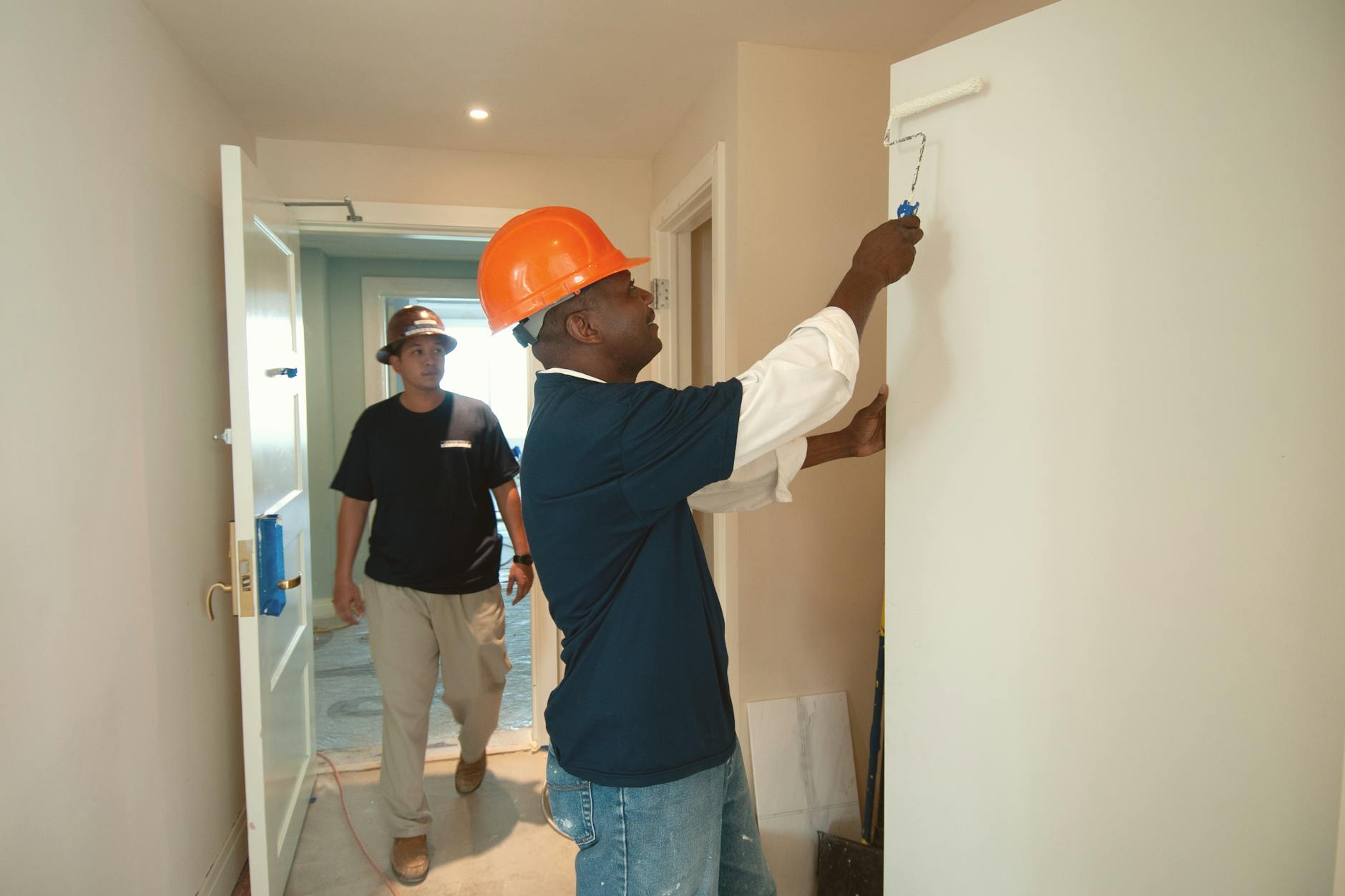
The Hidden Cost Most Homeowners Overlook
A low bid on paper rarely stays low once the rollers hit the tray. Most painting contractors quote you for paint application alone, but thorough surface preparation routinely adds an extra 15% to 30% to the initial total.
Prep work and wall repair
If your drywalls have nail pops, small cracks, or old water stains, expect to pay between $2 and $5 per square foot just to get those surfaces paint-ready. A standard $2,500 base quote jumps to $3,250 after a crew spends four hours scraping flaking latex, patching holes, and applying a oil-based primer like Zinsser Cover-Stain. If your contractor leaves wall repairs off the initial estimate, you'll pay for them mid-project at a higher hourly rate.
Furniture moving and protection
Painters won't work around your sectional for free. Moving heavy furniture to the center of the room, covering it with plastic, and taping off baseboards adds billable labor fast. We recommend clearing the room yourself the night before to save at least $150 in setup fees.
Final cleanup fees
Some crews dump dirty wash water down your lawn drains and leave blue painter's tape stuck to your trim unless you explicitly pay for cleanup. Ask whether HEPA vacuuming for dry drywall dust, paint chip disposal, and touch-up jar creation are bundled into the proposal. If they aren't, expect another $100 added to your final invoice.
How to Vet “Painters Near Me” Effectively
Check BBB and online reviews
Start with the Better Business Bureau. A rating of A‑ or higher weeds out the chronic complainers. Then skim Google, Angi, or Yelp; a pattern of five‑star reviews with recent dates beats a lone perfect score from two years ago. If the BBB shows unresolved complaints, move on.
Ask for references and photos
Never settle for “we have happy customers.” Request two homeowner references from the last six months and ask each for before‑and‑after photos. A quick call will reveal whether the contractor actually handled prep work—patching drywall, sanding, or caulking. If a reference can’t recall the job details, that’s a red flag.
Get three detailed estimates
Ask each painter to break down labor, materials, surface preparation, and cleanup into separate line items. Here’s a tiny comparison you can copy into a spreadsheet:
| Item | Painter A | Painter B | Painter C |
|---|---|---|---|
| Surface prep (sq ft) | $0.45 | $0.60 | $0.55 |
| Paint (premium) | $1.20 | $1.10 | $1.25 |
| Labor | $0.70 | $0.80 | $0.75 |
| Total per sq ft | $2.35 | $2.50 | $2.55 |
If Painter A’s total looks cheapest but the prep line is $0.45 versus $0.60 from Painter B, you’ve already spotted a 15 % saving on the hidden work. Do the math for your own square footage; a $5,000 quote can swing by $750 once you factor prep.
Bottom line: filter by BBB A‑+, verify recent references with photos, and compare line‑item totals. Those three steps usually expose the hidden 15‑30 % that turns a “cheap” bid into a budget buster.
Comparing Quotes: What Should the Numbers Really Look Like?
Price per square foot breakdown
Standard paint jobs sit between $1.50 – $3.50 per sq‑ft. The spread isn’t random; low‑end contractors cut corners on surface prep, while high‑end firms include multiple coats and better coverage. A quick reference table helps you spot outliers:
| Scope | Low end | Mid range | High end |
|---|---|---|---|
| Paint only (no prep) | $1.50 | $2.40 | $3.50 |
| Paint + basic prep | $2.00 | $2.90 | $4.00 |
| Paint + extensive prep | $2.50 | $3.40 | $4.60 |
If a quote lands far below the “basic prep” column, ask what’s been omitted.
Labor vs. material costs
Across the industry, labor accounts for about 60‑70 % of the total. That means material—paint, primer, caulk—makes up the remaining 30‑40 %. For a 1,200‑sq‑ft room, a $2,400 estimate would break down roughly:
- Labor: $1,560 – $1,680
- Materials: $720 – $840
When the labor line looks inflated, verify the crew size and daily hours. A common pitfall is paying for “clean‑up” that the contractor already includes in the labor rate.
Premium paint markup
Choosing a premium brand like Sherwin‑Williams Emerald tacks on $0.30 – $0.60 per sq‑ft. On a 2,000‑sq‑ft interior, that’s an extra $600‑$1,200. The upgrade improves durability, but it’s not a freebie; it should appear as a separate line item.
Worked example
You receive two bids for a 1,500‑sq‑ft living area:
- Contractor A: $2,250 total, $1,600 labor, $650 materials (standard paint).
- Contractor B: $2,850 total, $1,800 labor, $750 materials (Emerald).
Both fall within industry norms. Contractor B’s higher price stems directly from the premium paint markup, not hidden fees. If the numbers line up like this, the quote is likely trustworthy.
When the Usual Advice Fails: Large‑Scale vs. DIY Projects
Projects over 2,500 sq‑ft
A 3,000‑sq‑ft house might look cheap on paper—$1.50 per square foot sounds like a bargain. In reality, the first $500 you spend on a paint sprayer and a lift can wipe out that discount. A quick spreadsheet shows the break‑even point:
| Item | Rental cost (per day) | Days needed | Total |
|---|---|---|---|
| Paint sprayer | $45 | 2 | $90 |
| Scissor lift | $120 | 1 | $120 |
| Subtotal | $210 |
Add labor, and the DIY total climbs to $4,800‑$5,200, a range a professional crew would hit in a single day.
High‑ceiling or textured walls
Ceilings taller than 10 ft force you onto a ladder, then a scaffold. Textured plaster adds another layer of hassle: you’ll spend twice the time sanding, priming, and touching up. In our shop, a plain wall takes 0.5 hr per 100 sq‑ft; a textured one eats 1 hr per 100 sq‑ft. That’s a hidden 30‑hour overtime on a 2,500‑sq‑ft job—roughly $1,800 in labor if you pay $30 per hour.
ROI considerations
A pro‑grade finish isn’t just vanity. Real estate data shows a clean, even coat can lift resale value by 1‑2 %. On a $350,000 home, that’s $3,500‑$7,000 extra cash in the pocket. When you compare that to the $2,500‑$3,500 you’d spend on a DIY sprint, the professional route pays for itself.
If your project tops 2,500 sq‑ft, involves high ceilings, or features textured surfaces, treat a contractor as non‑negotiable. The hidden costs of DIY quickly outpace any upfront savings.
Next Steps: Hiring Your Contractor Without Regret
Final contract checklist
- Scope: List every room, square footage, and surface type. Note whether ceilings, trim, or cabinets are included.
- Timeline: Agree on start date, number of workdays, and any weather buffers for exterior jobs.
- Finish schedule: Specify primer, number of coats, and dry‑time expectations for each surface.
- Warranty: Require a written guarantee covering paint finish and labor for at least one year.
A clean contract looks like a bullet‑point list, not a wall of text. Anything missing now will become a dispute later.
Payment schedule and lien waivers
- Deposit: 10‑20 % up front (most of us pick 15 %). For a $5,000 job that’s $750.
- Milestone 1 – prep completed: 30 % of balance.
- Milestone 2 – first coat dry: 30 % of balance.
- Final payment – after walkthrough: remaining 20 %.
Each payment triggers a lien waiver signed by the contractor. It protects you from later claims on your property.
Post‑job walkthrough
- Paint coverage: Use a 12‑in. ruler to measure film thickness; look for streaks or missed spots.
- Touch‑ups: Mark any thin areas with a dry‑erase pen; contractor must address them before final sign‑off.
- Cleanup verification: Confirm all drop cloths, tape, and debris are removed; floor protectors should be intact.
We like the free PaintCheck app to log photos and notes in real time. Walk away with a signed completion form, the warranty sheet, and a copy of all lien waivers. Now you’ve locked in the price, the timeline, and the quality—no hidden surprises.
The short version
- Prep and repair can add 15‑30% to any painting quote—ask for a separate line item","A reputable contractor should show state licensing, $1M liability insurance, and an A‑or‑better BBB rating","Compare estimates by square‑foot cost, not just total price, to spot hidden markups
Frequently Asked Questions
Ready to Start Your Project?
About the Author
Talented Xpert connects businesses with top-tier freelance talent. Post a task, hire vetted experts, or find your next freelance project.